AI Automation for Insurance Companies in Sri Lanka
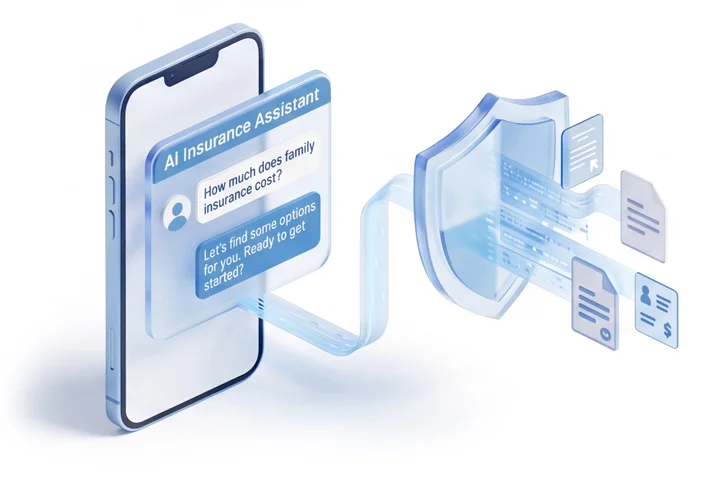
AI Automation for Insurance Companies in Sri Lanka: Fixing the FNOL Bottleneck
It’s 9pm on a rainy night in Colombo. A policyholder has just been in a fender-bender on the Baseline Road and is calling their insurer to report it. The line rings out, or it’s answered the next morning by an agent who has to manually pull up the policy, check coverage, log the incident on a separate system, and promise a callback. By the time the claim actually gets opened, a full day has passed — and the customer has already started wondering if a competitor would have picked up faster.
This is the everyday reality for most insurance companies in Sri Lanka: a First Notice of Loss (FNOL) process that still runs on phone queues, paper forms, and claims handlers manually re-typing the same information across three different systems. It isn’t a technology problem in the sense of missing software — insurers already run policy administration systems, core insurance platforms, and CRMs. The problem is that none of it talks to the moment a customer actually needs help: the call, the WhatsApp message, the scanned police report sitting in an inbox.
That’s the exact gap AI automation for insurance is built to close.
Why Insurance Is a Different Kind of Automation Problem
Automating a restaurant booking line and automating an insurer’s claims desk are not the same job. A missed table booking costs a business one sale. A mishandled FNOL call — wrong details logged, a coverage question answered incorrectly, a claim opened three days late — costs real money, creates regulatory exposure, and damages trust at the exact moment a customer is already stressed.
That’s why insurance automation has to be built around three things most generic chatbot tools were never designed for:
- Accuracy on regulated data. Policy numbers, coverage limits, and exclusions have to be pulled correctly, every time — not approximated.
- Multi-channel consistency. A claim reported by phone, WhatsApp, or a walk-in should open the same record, not three disconnected ones.
- A clear human handoff. The system needs to know exactly when to escalate — a disputed claim, a high-value loss, a policyholder who’s upset — rather than trying to resolve everything itself.
Where AI Automation Fits Inside an Insurer’s Operation
At TaskForce AI, insurance automation isn’t a single product — it’s built from three of our six automation units working together: AI Voice Agents, AI Workflow Agents, and AI Document Processing.
AI voice agents for FNOL and policy inquiries. An AI voice agent answers the call the moment it comes in — day or night — verifies the policyholder, captures the incident details (what happened, where, when, any injuries), and opens a structured FNOL record directly inside the insurer’s claims system. For routine policy questions — “is my windscreen covered,” “what’s my excess,” “has my premium renewal gone through” — it answers directly from the policy data instead of routing the caller through an IVR menu. Complex or disputed cases are flagged and handed to a human claims officer with the full transcript and details already logged, so nothing has to be repeated.
AI workflow agents for claims processing. Once a claim is opened, the workflow agent takes over the repetitive part: routing the claim to the right adjuster based on type and value, triggering document requests (police report, repair estimate, medical report), sending status updates to the policyholder over WhatsApp, and flagging claims that are sitting past SLA without action. This is the same claims-agent architecture we run for banking and hospitality clients, adapted to insurance workflows and regulatory requirements.
AI document processing for claim paperwork. Claims documentation in Sri Lanka is still overwhelmingly paper and scanned PDFs — police reports, garage estimates, medical certificates, ID copies. Our document processing agent extracts the relevant fields automatically, cross-checks them against the claim record, and flags mismatches (a repair estimate that doesn’t match the reported damage, an expired policy date) before they reach a human reviewer — cutting down both manual data entry and the errors that come with it.
A Realistic Example: Motor Claims Intake
Take a mid-sized motor insurer running a claims call centre in Colombo. Before automation, every FNOL call needed a live agent, available roughly 12 hours a day. After-hours accidents waited until the next morning to be logged, and each call took an average of 8–10 minutes of manual data entry per claim.
With an AI voice agent handling first contact, calls are answered 24/7, incident details are captured and structured immediately, and the claim is opened in the core system before the policyholder even hangs up. The claims team walks in each morning to a queue of pre-logged, pre-verified claims instead of a stack of handwritten notes and voicemails — and the insurer isn’t losing the golden window of the first 24 hours after an incident, which is often when evidence (photos, witness details, police involvement) is easiest to capture accurately.
Why This Matters More for Insurers in 2026
Sri Lanka’s insurance sector is under the same pressure as banking: rising customer expectations, tightening margins, and a regulator paying closer attention to how claims are handled and how quickly. Two years ago, “digital transformation” for an insurer mostly meant a customer portal for premium payments. That’s no longer enough. Policyholders now expect the same instant response from their insurer that they get from a food delivery app — and the insurers that can report a claim in two minutes instead of two days are the ones that keep renewals.
Automation isn’t replacing claims officers, underwriters, or adjusters — it’s removing the repetitive intake and data-entry work that keeps them from spending their time on the judgment calls that actually need a trained person: assessing a disputed claim, negotiating a settlement, catching fraud patterns a script would miss.
Getting Started: What a Deployment Actually Looks Like
- Audit — We map your current FNOL, claims, and policy inquiry workflows, including every system already in place (core insurance platform, CRM, document storage).
- Connect — We integrate the voice, workflow, and document agents directly into those systems — no rip-and-replace required.
- Build the claims logic — Escalation rules, SLA flags, and document checks are configured around your actual policies and claim types, not a generic template.
- Train your team — Claims officers and call centre staff are trained on how the handoff works, so escalations arrive with full context.
- Monitor and refine — We track call handling time, claim turnaround, and escalation accuracy, and refine the system as your claim volumes and policy types evolve.
Most insurance deployments go live in phases, with the FNOL voice agent typically running within 3–5 weeks, and document processing and workflow automation layered in after.
Frequently Asked Questions
1. Can an AI voice agent really handle a First Notice of Loss call?
Yes. It verifies the policyholder against your records, captures a structured account of the incident, and opens the claim directly in your system — while flagging anything unusual (injuries, disputed liability, high claim value) for immediate human review rather than trying to resolve it itself.
2. Will this replace our claims officers?
No. It removes the manual intake and data-entry work — answering calls, logging details, chasing documents — so your claims officers spend their time on assessment, negotiation, and the cases that genuinely need judgment.
3. What languages can the voice agent handle?
TaskForce AI voice agents are built for English, Sinhala, Tamil, and Arabic, which matters for insurers serving customers across Sri Lanka and the Middle East. English deployments are production-ready today; Sinhala and Tamil rollouts are handled on a case-by-case basis depending on your customer base.
4. Is our policy and claims data secure?
Yes. Connections are encrypted, access is restricted to your authorised team, and TaskForce AI does not use client data to train external models or share it with third parties. Our deployments follow SOC-2 aligned practices.
5. Can it integrate with our existing core insurance system?
In most cases, yes. We connect directly into the policy administration and claims systems insurers already run, rather than asking you to migrate to a new platform.
6. What happens with documents like police reports or repair estimates?
Our AI document processing agent extracts the relevant data automatically, checks it against the claim record for inconsistencies, and routes it to the right reviewer — cutting the manual re-typing that slows claims down.
7. How does this help with regulatory or audit requirements?
Every call, claim update, and document is logged automatically with a clear audit trail, which is typically easier to review than scattered notes, voicemails, and email threads.
8. What does this cost compared to expanding our call centre?
Significantly less than hiring and training additional claims intake staff, and it scales without adding headcount during peak claim periods (storm season, holiday traffic accidents). Pricing depends on call volume and how many systems need integration — book a free discovery call for a quote specific to your operation.
9. How long does it take to see results?
Most insurers see the FNOL voice agent live within 3–5 weeks. Full claims workflow and document processing integration typically completes within 6–8 weeks, depending on system complexity.
10. Can this scale as our policyholder base grows?
Yes. The system is built to handle rising call and claim volume without needing to rebuild the setup — new policy types, branches, or channels can be added as your business grows.
TaskForce AI designs and deploys AI-powered voice agents, claims workflow automation, and document processing systems for insurance companies across Sri Lanka, Oman, and the UK — cutting claim intake time and giving policyholders a response the moment they need one. Headquartered in Colombo, with active operations in Muscat and London.
Book a free discovery call: https://www.taskforceai.tech/book-demo
taskforceai.tech | +94 77 669 7566
Company: Taskforce AI
Address: Nugegoda Business Center, Unit 37, 2nd Floor, 80 Nawala Rd, Nugegoda 10250
Phone: +94 77 669 7566
Website: https://taskforceai.tech/