Sinhala TTS
Building a Sinhala TTS engine that actually works
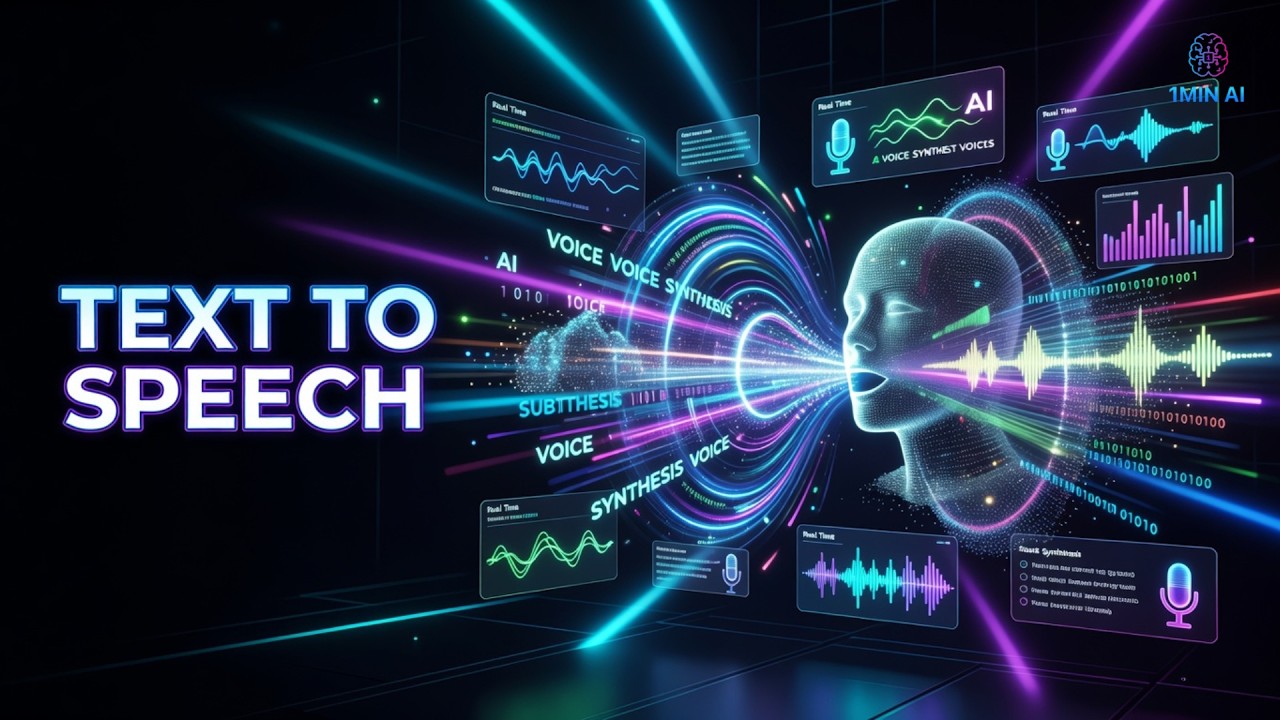
Sinhala TTS (text-to-speech) is the technology that turns written Sinhala into natural, spoken audio. Since July 2026, TaskForce AI has been running its own in-house Sinhala TTS in production, powering conversational Sinhala voice agents for Sri Lankan businesses.
That sounds simple on paper. In practice, Sinhala is one of the harder languages to synthesise well. It is spoken by around 17 million people, yet it has only a fraction of the open speech data available for English, Hindi or even Tamil. Most global voice platforms either skip Sinhala entirely or produce robotic output that no customer would tolerate on a phone call.
This article explains why building a Sinhala TTS is technically difficult, how limited training data shapes every engineering decision, and what it takes to get a model into live, real-time use.
Why Sinhala is hard for speech synthesis
Sinhala is an Indo-Aryan language with its own abugida script. Each written character is usually a consonant carrying an inherent vowel, modified by vowel signs (pili) and special marks. That structure creates several problems a TTS system must solve before it produces a single sound.
- Complex script rendering. A single syllable can be built from multiple Unicode code points, including the zero-width joiner used for conjunct and touching letters. The same visible word can be encoded in more than one way, so the model must see clean, consistent input.
- Inherent vowel ambiguity. Whether a consonant’s inherent vowel is pronounced as /a/, reduced to a schwa-like /ə/, or dropped depends on position and context. The script does not mark this explicitly, so a naive character-to-sound mapping mispronounces a large share of words.
- Diglossia. Written Sinhala and spoken Sinhala differ significantly in grammar and vocabulary. A voice agent reading formal, literary Sinhala aloud sounds stiff and unnatural to a caller who expects colloquial speech.
- Prenasalised and retroflex sounds. Sinhala has prenasalised stops (such as ඬ, ඳ, ඟ, ඹ) and retroflex versus dental contrasts that are subtle and easily blurred by an under-trained model.
The low-resource data problem
Modern neural TTS models for English are trained on hundreds or thousands of hours of carefully aligned speech and text. For Sinhala, publicly available, studio-quality, single-speaker data is measured in single-digit hours. Open sources such as OpenSLR corpora and Meta’s MMS project help, but they come with real limitations:
- Mixed recording conditions, background noise and inconsistent microphones
- Multiple speakers with limited audio per speaker, which hurts voice consistency
- Read, formal speech rather than the conversational tone a voice agent needs
- Transcripts that do not always match the audio exactly, which breaks alignment during training
A production-grade custom voice typically needs 1,000 to 2,000 purpose-written prompts and 6 to 15 hours of clean recorded audio, with the script designed by a linguist to cover every phoneme and common phoneme pair. Writing that script, recording it with a professional voice artist and cleaning every clip is slow, expensive work. There is no shortcut: a model can only speak sounds it has heard enough times.
The text front-end: normalisation and G2P
When data is scarce, the text front-end matters more, not less. Every error the front-end removes is one the neural model no longer has to learn from limited examples.
Text normalisation converts raw input into speakable Sinhala. Real business conversations are full of numbers, dates, times, currency amounts, phone numbers, room types and English brand names. “Rs. 12,500” has to become the correct spoken Sinhala form, and a booking date must be read the way a Sri Lankan receptionist would say it. Each of these needs rules written specifically for Sinhala.
Grapheme-to-phoneme (G2P) conversion maps written characters to actual sounds. Because of the inherent vowel problem, a rule-based G2P alone is not enough. A practical approach combines hand-written phonological rules, an exception lexicon for common words and names, and a learned model for everything else. Unicode normalisation must run first, so that differently encoded but identical-looking words produce the same phoneme sequence.
Modelling strategy with limited data
Training a large TTS model from scratch on a few hours of Sinhala leads to overfitting, mumbled syllables and unstable alignment. Low-resource TTS work relies on a few proven techniques instead:
- Transfer learning. Start from a model pre-trained on large multilingual speech data, so it already understands general acoustics, rhythm and voice quality. Fine-tuning then teaches it Sinhala-specific phonetics with far less data.
- Phoneme-level input. Feeding the model phonemes rather than raw characters lets it share sound knowledge learned from related languages, which reduces the data needed for each Sinhala sound.
- Data cleaning over data volume. Trimming silences, removing noisy clips, normalising loudness and fixing transcript mismatches often improves quality more than adding more low-grade audio.
- Augmentation. Controlled pitch and speed perturbation stretches a small dataset further without teaching the model bad habits.
- A separate neural vocoder. The vocoder converts predicted spectrograms into waveforms. Fine-tuning it on the target voice removes much of the metallic, buzzy quality common in low-resource systems.
Prosody, code-mixing and real-time latency
Correct pronunciation is only half the job. A voice agent also needs natural prosody: the rise and fall of pitch, pauses at the right places, and a question that actually sounds like a question. With limited data, the model sees few examples of each intonation pattern, so punctuation handling and phrase-break prediction must be engineered carefully.
Code-mixing is the everyday reality of spoken Sinhala. Sri Lankans routinely mix English words into Sinhala sentences: “booking eka confirm karanna,” “room rate eka.” A Sinhala TTS that cannot pronounce English loanwords with a natural Sri Lankan accent fails immediately in business use. This requires handling mixed-script input and a pronunciation lexicon for common English terms.
Latency is the final constraint. On a live phone call, the caller expects a reply within about a second. The TTS must stream audio in small chunks, start speaking before the full sentence is synthesised, and run on infrastructure that stays fast under concurrent calls.
Evaluation and production
Automated metrics only tell part of the story for a low-resource language. The real test is native listeners. Sinhala TTS output should be judged on intelligibility, naturalness and pronunciation accuracy by native speakers, using sentences drawn from real use cases such as hotel bookings, insurance enquiries and customer support.
A second test is round-trip accuracy: synthesised audio is passed through a Sinhala speech recogniser and compared with the original text. Words that consistently fail point directly to G2P or data gaps.
TaskForce AI’s Sinhala TTS in operation
TaskForce AI’s Sinhala TTS has been in live operation since July 2026. It powers our conversational Sinhala voice agents, which handle real customer calls for Sri Lankan businesses alongside our English and Tamil agents. Building it in-house gives us control over pronunciation, voice character, latency and data privacy that off-the-shelf platforms cannot offer for Sinhala.
If you want to hear it, we offer live demos. Contact TaskForce AI on 0776697566 or via WhatsApp at wa.me/94776697566.
Frequently asked questions about Sinhala TTS
1. What is Sinhala TTS?
Sinhala TTS (text-to-speech) is technology that converts written Sinhala text into natural spoken audio. It is used in voice agents, IVR systems, accessibility tools, announcements and customer service automation.
2. Is there a production-ready Sinhala TTS available in Sri Lanka?
Yes. TaskForce AI has operated its own in-house Sinhala TTS in production since July 2026, powering live conversational Sinhala voice agents for Sri Lankan businesses.
3. Why don’t major global TTS providers offer high-quality Sinhala voices?
Sinhala is a low-resource language with very little clean, aligned speech data. Its script, inherent vowel rules and colloquial speech patterns also need language-specific engineering that global providers rarely prioritise.
4. How much data is needed to train a Sinhala TTS voice?
A production-quality custom voice typically needs 1,000 to 2,000 linguist-designed prompts and 6 to 15 hours of clean studio audio from one speaker. Transfer learning from multilingual models reduces this significantly compared with training from scratch.
5. Can a Sinhala TTS handle English words mixed into Sinhala sentences?
It must, because code-mixing is how Sri Lankans actually speak. TaskForce AI’s Sinhala TTS is built for real business conversations, where English terms like booking, room rate and policy appear inside Sinhala sentences.
6. Is Sinhala TTS fast enough for live phone calls and IVR?
Yes, when it is built for streaming. Audio is generated and delivered in small chunks so the agent starts speaking quickly, keeping conversations natural on live calls.
7. How can telecommunication companies use Sinhala TTS?
Telcos can use it for Sinhala IVR menus, automated billing and balance notifications, outbound service calls, network outage announcements and AI customer support agents that reduce call centre load.
8. Can Sinhala TTS be integrated with existing AI or call centre platforms?
Yes. A Sinhala TTS can sit inside a voice agent pipeline alongside speech recognition, a language model and telephony providers. TaskForce AI integrates its voice agents with telephony, WhatsApp, CRMs and booking systems. Contact us to discuss your integration needs.
9. How is Sinhala TTS quality measured?
Through native-speaker listening tests for naturalness, intelligibility and pronunciation, plus round-trip checks where synthesised speech is transcribed back to text and compared with the original.
10. Does TaskForce AI also support Tamil and English voice agents?
Yes. TaskForce AI builds voice agents in Sinhala, Tamil and English, so businesses can serve customers across Sri Lanka in their preferred language. Live Sinhala demos are available on request via 0776697566.
Your Business — On Autopilot.
📞 Call or WhatsApp: +94 77 669 7566
🌐 Book a free demo: https://www.taskforceai.tech/book-demo/
📍 Nugegoda Business Centre, Unit 37, 2nd Floor, 80 Nawala Road, Nugegoda 10250, Sri Lanka | Muscat | London